
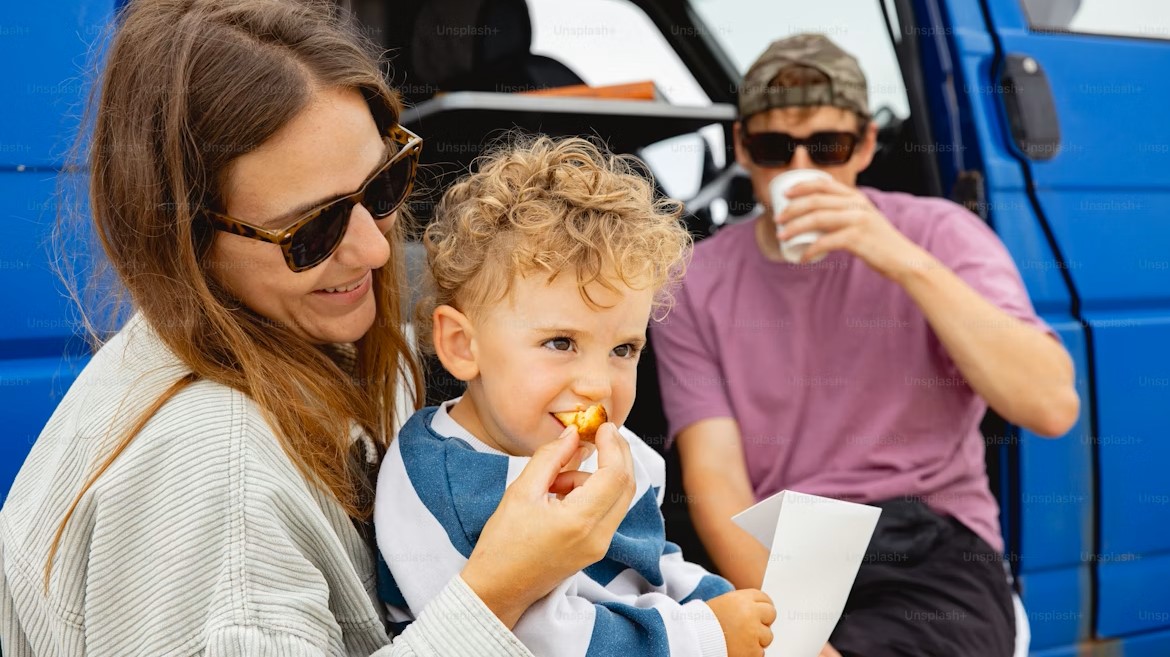
The journey doesn’t start when you reach your destination, but much sooner – when you start to feel tired after a few hours on the road, even though it’s not yet time for lunch. That’s when the temptation to stop at the first petrol kiosk you see and pick up what’s handy kicks in. And it’s not because you wanted to – it’s just that hunger catches up at the wrong time, even though you weren’t prepared for the journey.
Travelling knocks you out of your routine, and with it, out of good eating habits. Nutritionists point out that food is often the last thing on the agenda when planning a trip, even though it’s what determines how you feel physically on the road and how much energy you have to enjoy what you’re going to find.
Why is it harder to eat healthy when travelling?
At home, everything is clear: the contents of the fridge are known, they are easily accessible, and we often have more than one snack hidden away. On the road, this structure disappears. We eat when we stop, not when we feel hungry. Choices are limited to what is available at the airport, at the petrol station, or in the train carriage.
Nutritionists point out that to keep blood glucose levels stable, it’s important not to allow yourself to go without eating for more than four hours – something that can easily go unnoticed on a journey. Add to that the fact that hunger on the road often strikes when you’re waiting, running late, or just bored – and impulsive choices become the natural solution.
The solution recommended by dieticians is simple: healthy snacks for the journey should be packed in your backpack in advance so that you don’t have to rely on chance on the road. It’s not about creating the perfect diet plan – it’s just that the best option is already within arm’s reach.
What does a travel snack really need?
The context of the trip makes additional demands that are not thought of at home. Food has to be able to keep without refrigeration, fit in a rucksack or handbag, not get dirty, not ruin clothes, and – ideally – not create crumbs on the seat.
A good travel snack should contain protein, which is the most nutritious macronutrient in terms of satiety, fibre for a long-lasting feeling of fullness, and good fats, which slow down digestion and help maintain a stable energy level. These three components together mean that the snack really does keep you full until your next meal, and not just fill your stomach for a short time.
Healthy snacks for travelling: the most popular options and where the limits lie
Some options are classics for a reason – they really work. But each has its own nuances that are worth knowing in advance.
Fruit is fast, fresh, full of vitamins and moisture, which is essential on the road. But without protein or fat, they’re short-lived, and softer fruit in a rucksack quickly becomes unattractive. Apples, oranges, or bananas are the best for travelling and can withstand longer distances.
Nuts are a compact source of protein and good fats that don’t spill, don’t crumble, and don’t tolerate heat. Dieters report that a small amount of nuts is very filling due to the combination of protein, fibre, and fat – but it’s worth sticking to a serving size of around 30 grams, as it’s easy to eat more than you planned.
Dried fruit is light, sweet, and long-lasting. However, without fibre and with concentrated sugar, they are absorbed more quickly than fresh fruit – so they work well as a companion to nuts rather than as a snack on their own.
Vegetable sticks with hummus are the perfect combination of nutrition and freshness, but require cold storage and proper packaging. On the plane, there are additional questions about the liquid rules. Suitable for a car journey with a cool bag but not for every situation.
What’s the best thing to put in your backpack?
In practice, it works best when one choice already covers several needs at once – there is no need to think about combining nutrients, and everything has already been thought out in advance. This is the principle behind Sotukai – Lithuanian plant-based balls that combine a source of protein and good fats (nuts and seeds), natural sugar (dried fruit), antioxidants (berry powder), and spices in one serving, which not only add flavour but also their nutritional properties. Even cold storage is not necessary for up to two weeks, which means they can simply sit in your rucksack until you need them.
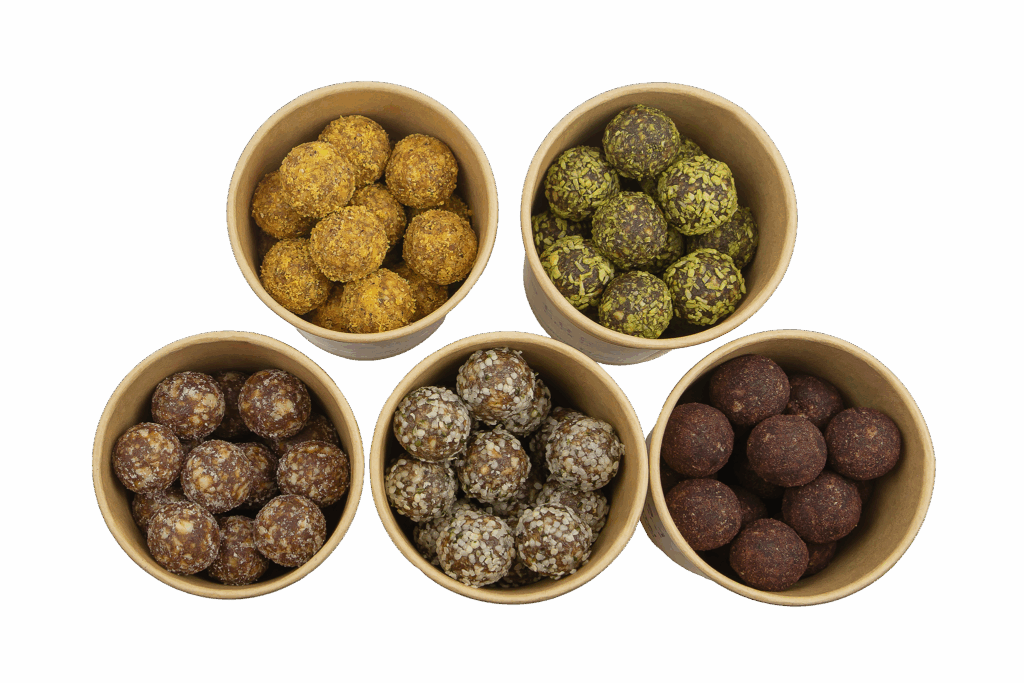
It’s a good idea to add fruit to such a snack – an apple or orange provides moisture and vitamin C – and of course water. When travelling, especially on a plane, it is very easy to get dehydrated without even noticing it, as the dry air can suppress thirst. Dietitians remind us that hunger and thirst are often confused, so it’s a good idea to have a drink of water first before reaching for a snack.
Food for the trip is decided before departure
Healthy snacks for the journey don’t require any special preparation – just that you think about them before you’re at the petrol station shelf. Ten minutes before departure, a packed apple, a small portion of nuts, and a compact, plant-based snack means no more rash decisions on the road. And that, as it turns out, is the biggest challenge of travel nutrition – not knowing, but being able to use what you know.
For more on the composition and flavours of Sotukai, see sotukai.lt.