
When switching to a plant-based diet, many people’s first problem is not the difficulty in choosing alternatives to main meals, but the choice of sweets. Cheese, milk, eggs – there is still a way out. But the craving for dessert – especially when it comes not out of hunger but out of a desire for something pleasurable – is a different matter. And it doesn’t get any simpler – added sugar is also to be avoided.
Is it even possible to have a sweet that is both vegan and free of refined sugar, and – most importantly – really tasty and not just “slightly appropriate”? The answer is yes, but you need to understand where that sweetness might come from.
Why “no sugar” doesn’t always mean better
The food industry is resourceful. You can find “no added sugar” labels on packaging hiding maltitol, aspartame, sucralose or other sweeteners that are much more aggressive on the gut than ordinary sugar. Other manufacturers simply replace sugar with date syrup or agave nectar and claim the product is “natural” – even though the glucose index may be similar to or even higher than that of regular sugar.
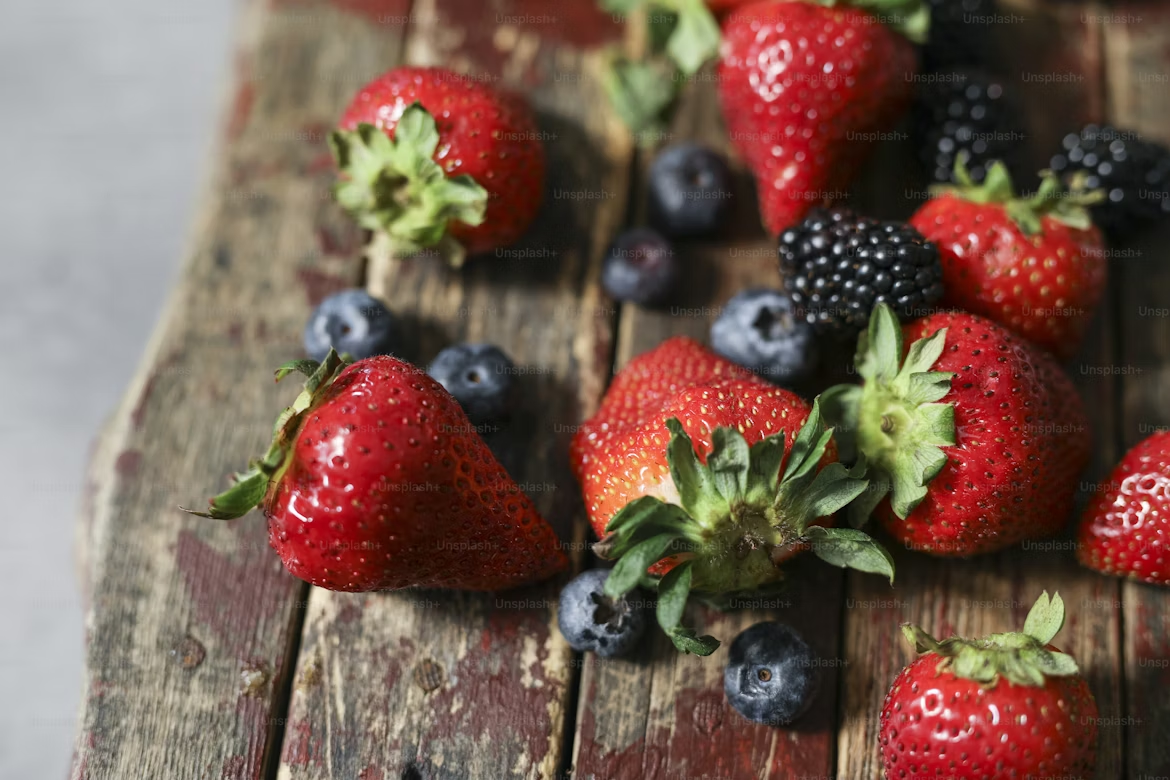
Products that are truly sugar-free use the whole fruit or berry – not extracts, not syrups, but the fruit itself, with its fibre, pectin and water. It is the fibre that determines how quickly the sugar from the fruit enters the bloodstream: slowly, steadily, without spikes. This is a completely different biochemistry to that caused by both refined sugar and its “natural” substitutes.
What do really healthy vegan sweets consist of?
The basic ingredients that make it possible to create a sweet, filling and nutritious vegan dessert alternative are a relatively small list – but each has a specific function.
Dates are the most commonly used natural sweetener in vegan confectionery. Medjool dates are very soft and sweet and contain potassium, magnesium and fibre. The sweetness is real, but it is absorbed more slowly than from sugar, as fibre and water come together.
Nuts and seeds – almonds, cashews, hemp seeds, chia – provide texture, protein and good fats. Fats are not only important for satiety: they help absorb fat-soluble vitamins and further slow down glucose spikes.
Fruit and berry powder is a concentrated source of vitamins, minerals and antioxidants. A kilogram of fresh berries yields around 100 grams of powder, so the nutrient density is extremely high. This allows even a small bite to provide a real dose of vitamins.
Cocoa, ginger powder, turmeric, cardamom are not only flavour elements, but also spices with antioxidant and anti-inflammatory properties. Genuine sugar-free cocoa is one of the richest sources of flavonoids.
When these ingredients are combined, the result is something that combines sweet taste with real nutritional value – and without compromising on veganism or sugar.
What the market offers and where the gaps are
Vegan confectionery has expanded significantly in recent years. A variety of date bars, nut balls and cocoa energy bars can be found in shops. However, a closer look at the labels shows that some of them still contain sugar or sugar substitutes, a significant amount of palm oil or a very long list of preservatives.
Another common observation is that many of these products offer one or two distinct flavours – date-cocoa, date-nut – but the composition falls short of what we might call true nutrition. They are tasty, but they do little for the body in terms of taste.
That’s why more and more people are choosing to make them at home – energy balls, date smoothies, nut bars. This is the perfect solution for those who like to cook and have the time. But for a daily dessert or snack, it requires planning, which life doesn’t always allow.
Sotukai – the Lithuanian answer to the vegan sweet dilemma
Sotukai are one-bite vegetable balls with a sweetness that comes exclusively from fruit – Medjool dates, dried apricots, quince. None of the nine flavours contain refined sugar, dairy or gluten, so they are naturally in line with the principles of a vegan diet – not as a tailor-made product, but simply because all ingredients are.
The nutritional content here goes well beyond what you would normally expect to find in a dessert. The minerals – potassium, magnesium, zinc, iron, phosphorus – come directly from the superfood’s ingredients: goji berries, baobab, sea buckthorn and hemp seeds. Vitamin E from nuts, antioxidants from berry powder, omega acids from chia. Spices such as cocoa, turmeric or ginger powder not only add to the flavour, but are themselves valuable botanical components with anti-inflammatory properties.
Each ball is handmade in Kelme. The flavours range from raspberry or lemon to matcha and peppermint, so both those looking for a fruity dessert and those looking for a more distinct flavour character will find their own option.
A sweetness that really satiates
The difference between a real vegan sweet with no added sugar and a mere imitation is felt in practice – not in theory. After a few mouthfuls, you don’t want more because your body gets what it asked for: not a boost of empty sugar, but real food with fat, protein and fibre, which signal satiety. It is the rare case that dessert and a real snack are one and the same thing.
For the composition, flavours and ordering options of Sotukai , see sotukai.lt.