

Coffee has its own character — bitterness, acidity and the aroma of roasted beans — and what we eat alongside it can enhance that character, soften it or turn it into something entirely new. Many people reach for whatever happens to be close at hand with their coffee: a biscuit, a chocolate bar or a slice of bread. Yet some pairings work incomparably better — not because of tradition or habit, but because of how flavours actually interact.
This is not an elaborate sommelier tradition that takes years to study. A few simple principles make it easier to see which snacks really work with coffee — and why the seemingly obvious choices are not always the best.
How coffee changes our perception of flavour
Before discussing pairings, it is worth understanding one thing: coffee changes the way we perceive other flavours. Its bitter compounds briefly suppress some taste receptors, so sweet foods often seem sweeter with coffee than they really are. This explains why even a small piece of chocolate is so enjoyable with an espresso: the coffee tempers the chocolate’s bitterness, the chocolate tempers the coffee’s bitterness, and together they become mellower.
Acidic coffee — ordinary black coffee or cold brew — pairs with sweet foods differently from espresso. Espresso’s bitterness and sweetness temper one another, making the combination mellower. The acidity of black coffee does not create this effect with a sweet snack: both flavours remain pronounced and can intensify one another to an unpleasant degree, especially if the sweetness is too strong. Snacks with subtle rather than pronounced sweetness therefore work better with more acidic coffee.
Pairings that work — and why
Dark chocolate — a classic for a reason. Its bitter compounds echo those found in coffee, so the two products seem to speak the same language. Chocolate containing 70 per cent cocoa or more works better than milk chocolate, which is too sweet and too rich, causing the coffee to lose its distinctiveness.
Nuts — a simple but very balanced choice. Their earthy, oily flavour contrasts with coffee’s acidity and bitterness in a way that makes both flavours more enjoyable. Almonds and hazelnuts work particularly well: their slight sweetness keeps the combination from becoming too heavy.
Savoury snacks — a less obvious but effective option. A little salty cheese, or even a few pieces of salted almond, works with coffee on the same principle as salt in baking: the contrast brings out both flavours. In Italy, savoury snacks are traditionally served with espresso — and that is no coincidence.
Spices — cinnamon, cardamom and ginger — naturally complement coffee’s aroma because many of their aromatic compounds are shared with the notes of roasted coffee beans. Together, these substances create an effect that the senses interpret as a fuller, more complex flavour.
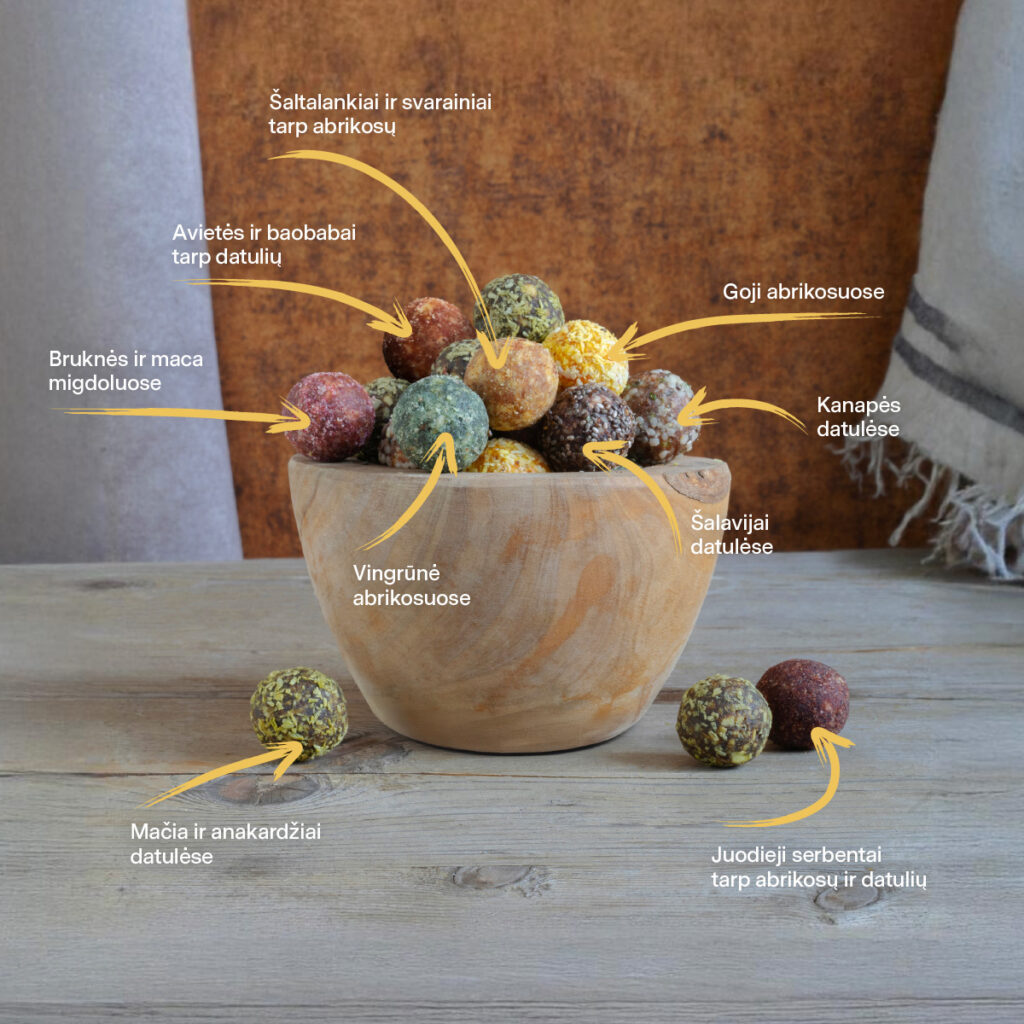
Dried fruit with nuts — this pairing works with coffee for several reasons: the nuts provide texture and an oily base, while the dried fruit adds sweetness and a gently tart aftertaste that works especially well alongside a cup of black coffee. Dried lingonberries, raspberries and sea buckthorn work particularly well here — their natural tartness complements the coffee’s aroma rather than competing with it. This very combination — nuts, seeds and berries together — forms the basis of Sotukai , so pairing them with coffee comes naturally.
How Sotukai pair with coffee
The flavour profile of Sotukai works with coffee for several reasons at once. The nut and seed base provides the same oily, earthy foundation as almonds or hazelnuts — a natural match for coffee. The berries — lingonberries, raspberries and sea buckthorn — add gentle natural acidity that complements the notes of black coffee and provides a refreshing contrast to espresso. The spices also found in Sotukai — cinnamon, ginger and cardamom — contain the same aromatic compounds we discussed as natural companions to coffee.
In other words, the ingredients in Sotukai align directly with the flavours that work well with coffee. They were not specially developed as a coffee snack, but people who try them with their morning cup often find that the combination works far better than expected.
What is best avoided
Foods that are both very sweet and very rich make the least successful pairing with coffee. A cream cake, rich iced biscuits or white chocolate products suppress the coffee’s aroma and leave a heavy, unsatisfying feeling. Coffee becomes just an ordinary drink whose flavour simply disappears among the other foods.
Highly acidic fruit — citrus fruit and pineapple — is also a poor choice with many coffees, because the two sources of acidity amplify each other to an unpleasant degree. This may work with milder-tasting coffee, such as coffee with milk, but rarely with black coffee.
A practical approach: where to start
To explore coffee and snack pairings more consciously, start with the simplest approach: taste the coffee on its own, take a mouthful of your snack, then taste the coffee again. The difference is often surprising: after nuts or dark chocolate, coffee tastes quite different, often much more refined and enjoyable. It is the best way to discover whether a pairing works, without rules or theories.
Snacks with coffee are about enjoyment, rather than following a protocol. But understanding why certain pairings work makes that enjoyment more conscious and easier to find.