
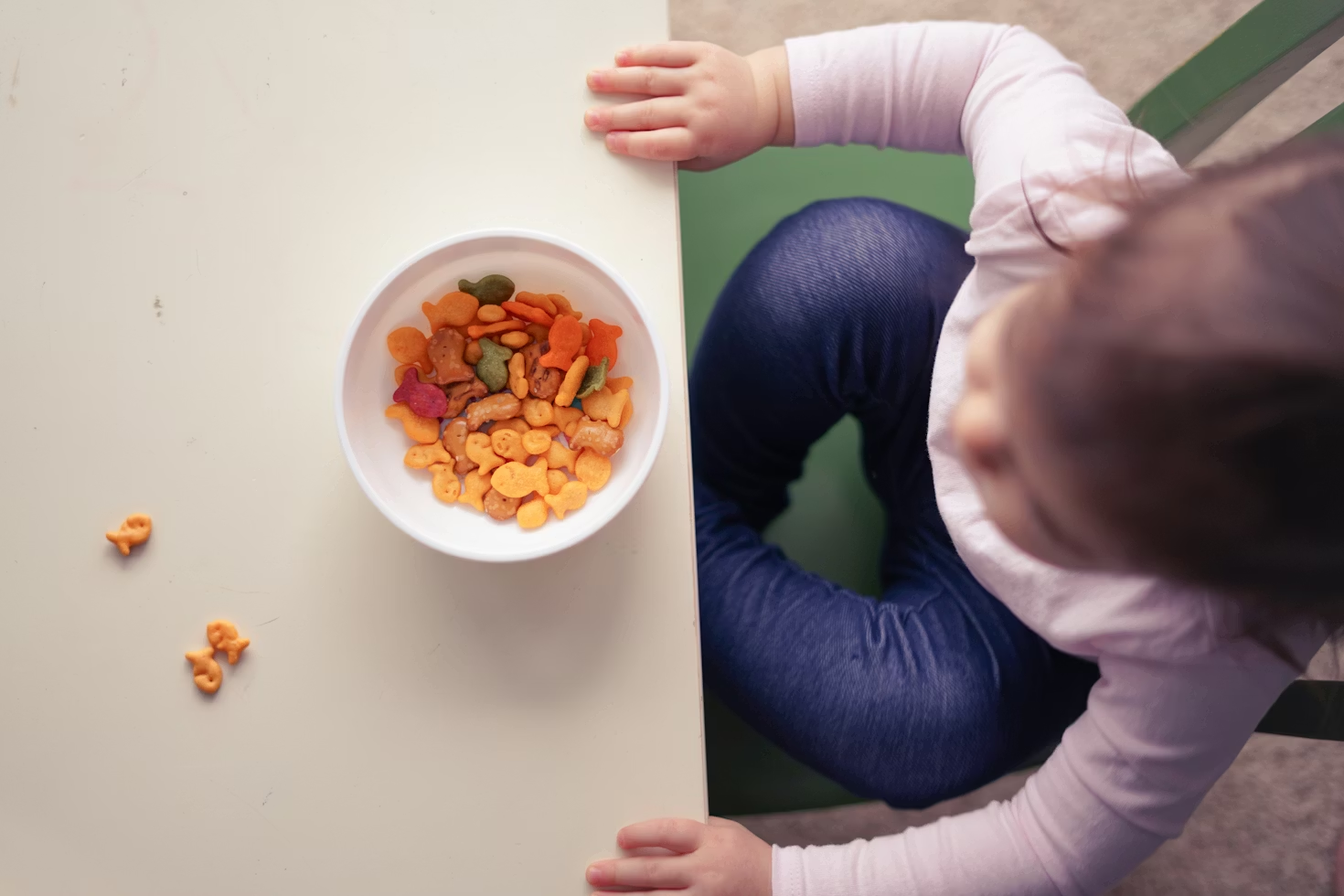
Almost every parent will recognise this experience: your child has only just had lunch, but an hour later is standing at the cupboard looking for something sweet. Not because they are truly hungry: their body simply wants more. The more often this cycle repeats, the more habitual it becomes.
Sweets are not the enemy here, and banning them is not the answer. The real question is different: what does a child actually need when reaching for that chocolate bar? And are there snacks for children that could meet that need better, nourishing the whole body rather than simply keeping their mouths occupied?
Sugar, energy and that curious afternoon tiredness
A child’s body processes sugar particularly efficiently, faster than an adult’s. Sweets do provide energy, but it disappears as quickly as it arrives. Blood glucose rises, insulin from the pancreas responds, and glucose falls. A child who could not stop moving half an hour earlier is suddenly tired, irritable or hungry again.
Repeated every day, this cycle has a cumulative effect: difficulty concentrating on homework, stronger cravings for sweets and less desire to eat proper food at lunch. This is not a question of willpower or parenting: it is simply physiology responding to what is eaten.
Food containing protein, healthy fats and fibre works very differently. These three groups of nutrients slow digestion, stabilise the glucose curve and give the body a real satiety signal. A child who has a snack with this combination of foods can usually make it to the next meal without drama, concentrate more easily and avoid circling the fridge every hour.
What does a growing body need?
Children’s nutritional needs differ from adults’ primarily because growth demands a constant supply of building materials. Protein plays a particularly important role: it is needed to form muscle, organs, skin, hair and eye tissues. This is not a niche concern for athletes but a simple biological fact: a growing body uses protein continually and in large quantities.
Fibre is often underestimated, yet its importance extends well beyond digestion. It feeds gut bacteria, which in turn affect immunity, mood and even resistance to allergens. The gut microbiome formed in childhood stays with a person throughout life, so this is no small matter.
Antioxidants from berries, vitamins from natural fruit and minerals such as zinc and magnesium all support normal immune function, neurological development and energy metabolism. Although these can come from a variety of sources, it is important to understand that processed food with added sugar does not provide these nutrients: it merely fills the stomach and supplies empty calories.
What parents most often choose, and how it works in practice
In families replacing sweets with healthier alternatives, a few classic options tend to appear. Each has real value, but also practical limitations.
Fruit is the easiest first step. It is rich in vitamins, fibre and naturally occurring sugar. Without protein or fat, however, it keeps children full only briefly: after a while they are hungry again, and the feeling of fullness was more token than real. Fruit works well as an addition, but is often not enough as a stand-alone after-school snack.
Dairy products — yoghurt, curd cheese and curd cheese bars — – provide protein and calcium, which matters for children’s bone strength. They are a valuable choice where there is no lactose intolerance or milk protein allergy, the latter being more common among children than many people think. Another consideration is that yoghurts on shop shelves vary greatly: many contain so much sugar that the idea of a healthier option starts to fade.
Nuts concentrate fats, protein and some minerals in one nutritious food. The problem is that they are among the most common food allergens and also pose a physical hazard to young children. They are excellent for older children, but not a universal solution for every age group.
Vegetables with different dips are one of the most nutritious options you can prepare at home. They combine protein from houmous, healthy fats and fibre from vegetables. But they require preparation time, refrigeration and, ultimately, a child’s willingness to touch vegetables, which is not always guaranteed without some negotiation.
All these well-intentioned solutions really do work better than sweets. Yet each requires planning, a fridge or circumstances that are not always available.
Sotukai: where all those ingredients meet
The idea that one small ball could contain enough nutrients for a substantial snack may sound doubtful at first. But Sotukai — Lithuanian, handmade plant-based balls — are exactly that kind of product, and their ingredients confirm it.
Inside are almonds and cashews (protein and healthy fats), hemp and chia seeds (omega fatty acids and fibre), goji berries, sea buckthorn and blackcurrants (antioxidants and vitamins), Medjool dates and quince (natural sweetness with no added sugar): more than two dozen superfood ingredients in one bite altogether. Ten Sotukai provide 12.5 g of protein and half the recommended daily fibre intake.
They contain no milk, gluten or refined sugar, meaning that they suit children with food intolerances as well as those whose parents simply want to avoid unnecessary additives. Sotukai get their sweetness from fruit, making it pleasantly moderate rather than overpowering or artificial.
The wide choice of flavours is friendly to children’s palates: soft, fruity varieties with raspberry or lemon, classic cocoa, and slightly more complex options with matcha or a hint of ginger. A nine-flavour selection lets children discover their own favourites, a small detail that can make a big difference to their willingness to eat.
Storage is simple too: no fridge is needed for up to two weeks; a drawer or rucksack will do. A serving is 4–5 balls with a glass of water or tea, once or twice a day.
A habit that forms quietly
Snacking habits develop through everyday repetition rather than grand discussions about healthy eating. Children simply become used to whatever is regularly at hand, and this familiarity gradually shapes their tastes. This is one of those areas where a small daily decision has an effect that lasts far longer than it seems.
A good snack for a child need not be complicated. It simply needs to be real: nutritious, tasty and something that does not require planning ahead every day.
Find out more about Sotukai, their variety of flavours and ingredients at sotukai.lt.