

Maca (Lepidium meyenii) is a plant grown high in the Andes of Peru. Its root, which looks like a small turnip, is used as food. It is dried and ground into a powder.
What maca tastes like
Maca powder has an earthy, slightly nutty taste with a hint of caramel. That is why it pairs well with dates, nuts, cocoa and cinnamon.
What is in maca
Dried maca root is mostly carbohydrate, and it also contains protein, fibre and minerals such as potassium, calcium and iron. People in the Andes have eaten this root as an everyday food for centuries.
Maca is often described as a source of energy or stamina. Scientists are studying this, but there is not yet enough reliable evidence in humans, so do not expect miracles from maca. It is a nutritious ingredient, not a substitute for coffee.
How to use maca
- Stir a teaspoon into a smoothie, hot cocoa or porridge.
- Combine it with sweet ingredients: dates, bananas, nut butter.
- Start with a small amount, as the flavour is quite distinct.
Maca in Sotukai
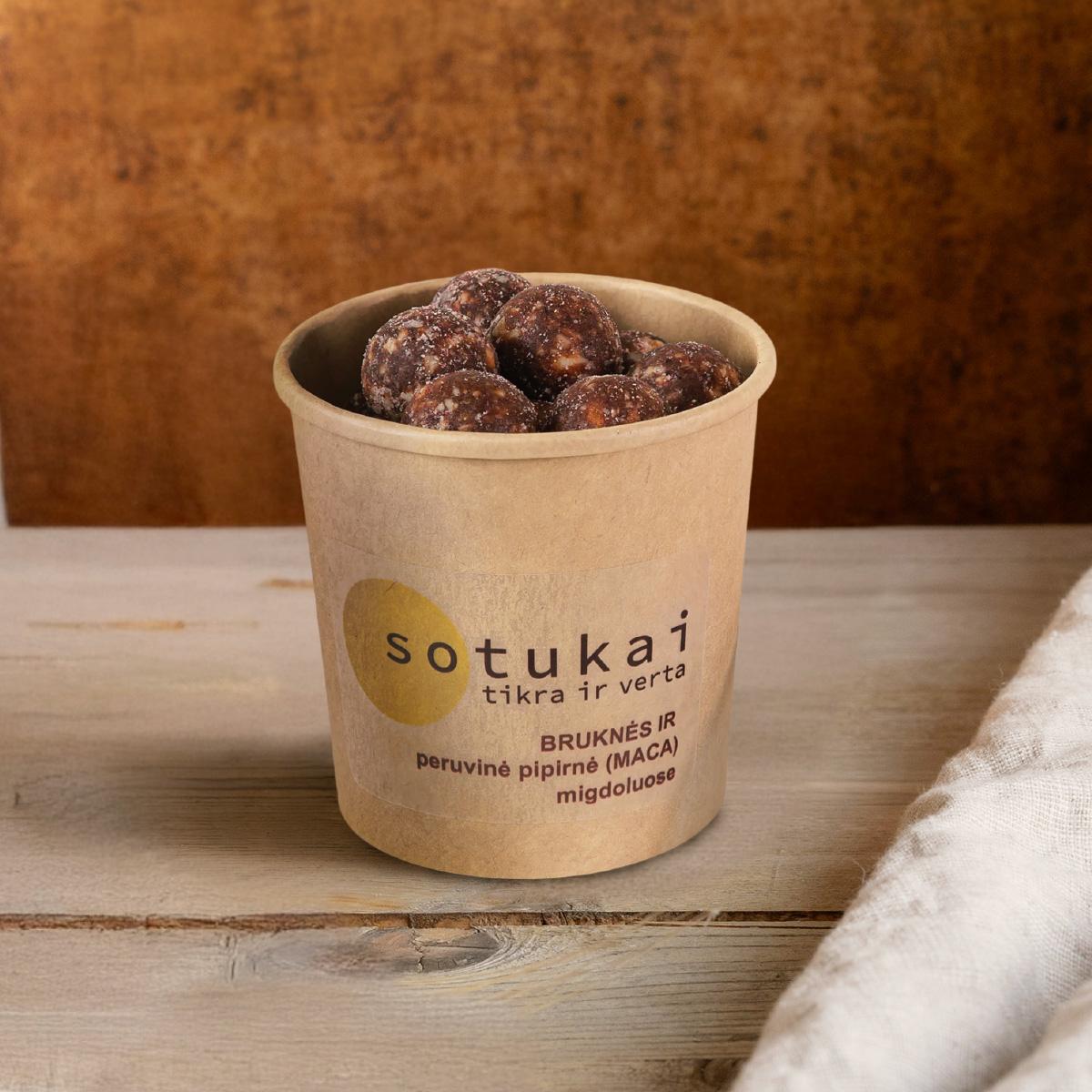
In Sotukai “Lingonberries and maca with almonds”, maca is combined with lingonberries, almonds and dates. The lingonberries add tartness, the dates add sweetness and the maca adds an earthy depth. We make Sotukai by hand in Kelmė, Lithuania, with no added sugar.
What to know when buying maca
Maca comes in yellow, red and black varieties, and their taste differs slightly. When buying a snack with maca, check where it appears in the ingredient list: ingredients are listed from the largest amount to the smallest.
Frequently asked questions
Is maca related to ginseng?
No. Maca is sometimes called Peruvian ginseng, but it belongs to the cabbage family and is related to turnip and radish.
How much maca can I eat?
As a food, maca is usually eaten in amounts of 1 to 2 teaspoons a day. If you are pregnant, breastfeeding or taking medication, talk to your doctor.
Does maca contain caffeine?
No, maca contains no caffeine. So it does not work like coffee and does not give a quick wake-up feeling.