

Healthy snacks are more common on shop shelves today than ever before. Every other product promises natural ingredients, energy or health — and each of those words can mean anything, or nothing in particular. Someone who genuinely wants to choose well often finds themselves facing dozens of similar packs, with no idea how they differ.
The answer is almost always in the ingredients. Not on the front of the pack or in the advertising slogan, but in the small print on the side or underneath. A few simple rules for reading that text can help you quickly distinguish a genuinely worthwhile snack from one that merely looks healthy.
The first step: ingredients before nutritional information
Many shoppers look at the nutritional information first: how many calories, how much protein, how much fat. But these figures do not tell the whole story. A hundred calories from dates, nuts and seeds and a hundred calories from puffed grains with sugar syrup are very different things, even if the nutrition tables look much the same.
The ingredients list is more informative. Ingredients are listed in descending order by quantity, which means that the first three make up the largest share of the product. If they include sugar, glucose syrup or corn starch, the product is essentially a sweet treat, regardless of what it says on the front.
More ingredients, more questions
There is no universal rule that a short ingredients list automatically means a better product. However, a long list full of names you cannot pronounce usually suggests that a product has undergone more processing than a simple snack needs. Emulsifiers, stabilisers, acidity regulators and texture additives all serve a technical purpose that is unnecessary when high-quality ingredients are used and the product is made in small batches.
By contrast, when a list includes almonds, dates, hemp seeds, berry powders and spices, these are signs that the product is made from real ingredients, rather than assembled from separate components. These names are recognisable because they are simply the names of foods.
Sugar: how much is really there, and where does it come from?
Sugar content is shown in the nutritional information under ‘of which sugars’ — but this figure does not distinguish naturally occurring sugar from added sugar. Ten grams of sugar from dates or lingonberries and ten grams from white sugar look the same in the table, but they differ: natural sources of sugar also contain fibre and micronutrients that slow its absorption. That is why you should also check the ingredients list: if it contains no sugar, syrup or sweeteners, the sugar comes only from the ingredients themselves.
Products that get their sweetness from natural berries and fruit rather than added sugar keep you feeling full for longer and do not cause such a sharp rise in blood sugar. This is more than theory: studies show that fibre and protein alongside naturally occurring sugars significantly slow their absorption.
Protein and fibre: a genuinely satisfying pair
The value of a healthy snack is best reflected by a combination of factors, rather than a single figure. Protein curbs hunger: it encourages the release of satiety hormones and slows stomach emptying. Fibre prolongs this effect by slowing digestion and feeding gut bacteria. Healthy fats, such as those found in nuts and seeds, add to the feeling of fullness and allow the body to absorb fat-soluble vitamins.
When these three components are present together, a snack keeps you feeling full for considerably longer than a product dominated by fast-digesting carbohydrates alone. When choosing healthy snacks, look for at least a few grams of protein and fibre per serving: a basic indication that the product provides nourishment rather than merely taking the edge off hunger for a moment.
What ‘natural’, ‘organic’ and other words on a pack mean
‘Natural’ is not a legally defined term in the European Union: almost anyone can use it. ‘Organic’ is regulated and refers to specific farming standards, but does not guarantee that a product will be more nutritious or healthier. ‘No added sugar’ means that sugar has not been added, but a product may still contain plenty of naturally occurring sugar from fruit or dates. You can read more about this in this article.
‘Superfood’ has no official definition : it is a marketing term. However, when it describes specific ingredients such as matcha, goji berries or baobab, it becomes more tangible: these ingredients do have certain nutritional properties that can be verified. The question is whether the product contains enough of them to make a real difference, or merely token amounts for the label.
Healthy snacks with genuinely good ingredients
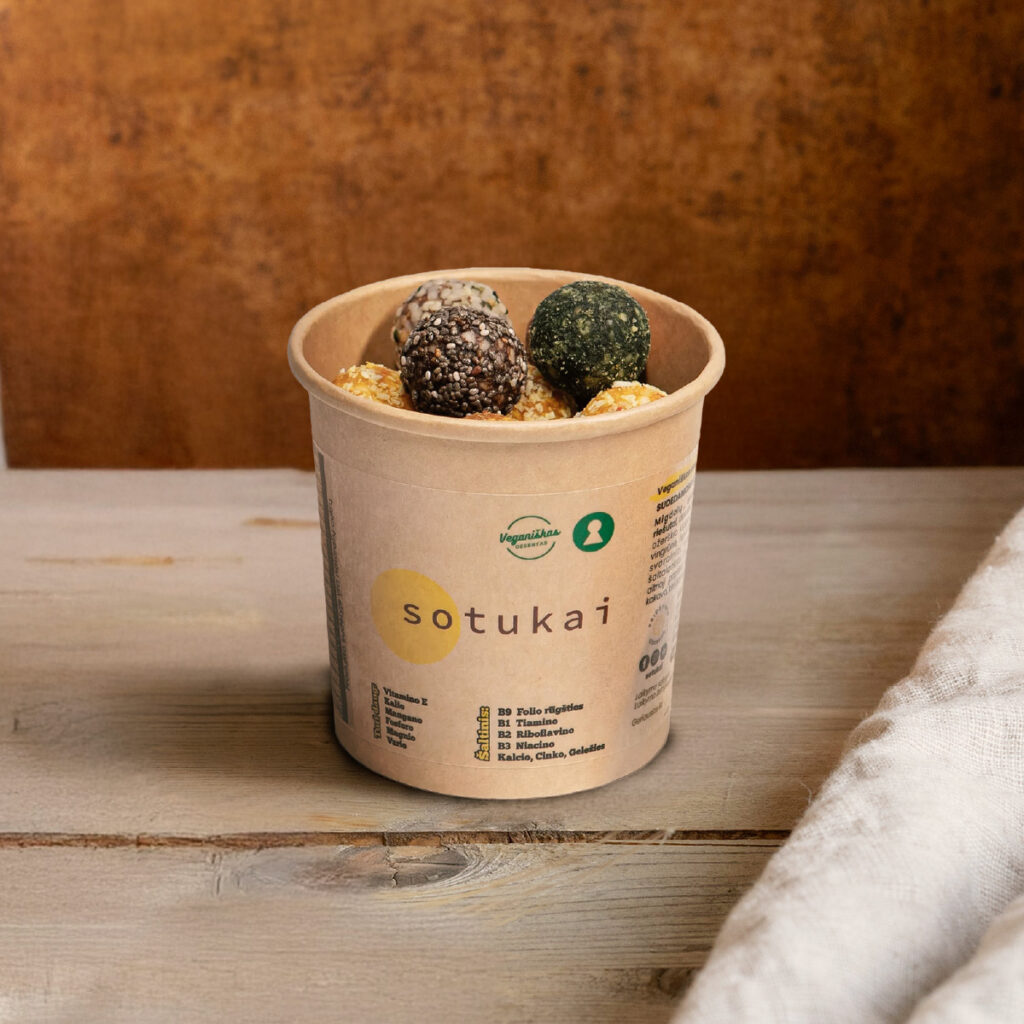
A healthy snack with good ingredients has several easily recognised features. Its ingredients are familiar: their names are simply the names of foods. There is no added sugar on the list. There are sources of protein: nuts, seeds and pulses. There are sources of fibre: fruit, berries and seeds. No questions or guesswork about what a name means.
Sotukai are one of those products whose ingredients meet these criteria without qualification. More than twenty natural ingredients — almonds, cashews, hemp seeds, dates, lingonberries, raspberries, sea buckthorn, matcha, baobab and spices — with no added sugar, stabilisers or preservatives. Every ingredient is included for a specific reason: nuts and seeds provide protein and healthy fats, while fruit and berry ingredients provide natural sweetness, vitamins and fibre. This is not an ingredients list that needs explaining: you can read it and understand it straight away.
That is the best test of all: can you read the ingredients list and understand what is inside? If so, the product is already worth a closer look.