Food labels are the first thing we see when we pick a product off the shelf. A colourful badge, a green leaf or a reassuring claim can determine a purchase within seconds. But not all these words carry the same weight: some are backed by strict legislation and independent checks; others are simply marketing language that no one has verified. Understanding the difference helps you make more informed choices, rather than letting packaging design decide for you.
‘Organic’: the only word with a genuine legal guarantee
Of the most common label claims, ‘organic’ is the only one with a clear legal meaning in the European Union. Since 1 January 2022, a Regulation has applied throughout the EU, under which a product may be called organic only if it meets detailed production requirements and is certified by an independent control body. The pack must display the EU green leaf logo together with the certification body’s code. Lithuania’s State Food and Veterinary Service makes it clear: wording such as ‘made only from natural ingredients’ or ‘natural’ does not confirm that a food is organic.
It is also important that the use of genetically modified organisms in any form is prohibited in organic production: this prohibition is set out in the Regulation. An organic product therefore automatically also means GMO-free, although the reverse is not necessarily true.
‘Natural’ on a food label: a word without legal substance
The word ‘natural’ on food packaging is not regulated under EU law. This means that manufacturers can use the word with almost no restrictions : neither what it must mean nor who must verify it is defined. Scientific studies show that consumers consistently associate the label ‘natural’ with greater healthiness, safety and environmental friendliness , even when the ingredients list itself provides no basis for this. This gap between consumers’ expectations and what the label actually means is the central problem.
In January 2024, the European Parliament adopted a directive against greenwashing, which aims to ban unsubstantiated environmental and similar claims. The expressions specifically prohibited include the word ‘natural’ without evidence. However, the directive will only take effect in EU countries’ laws once Member States transpose it into national law, for which at least 24 months have been allowed. For now, therefore, ‘natural’ on a pack remains a marketing decision rather than a legal fact.
‘GMO-free’: a more concrete claim, but not always meaningful
‘GMO-free’ labelling is the most frequently discussed food label claim. Under EU law, genetically modified organisms must be labelled if GMOs account for more than 0.9% of a product’s composition. As a result, ‘GMO-free’ on a product on European shelves often simply confirms what you would expect anyway. A scientific study highlights a subtler problem: the claim ‘GMO-free’ cannot be applied to products for which no genetically modified version exists . For example, putting it on salt is pure marketing manipulation, because salt cannot, by its nature, contain GMOs.
Studies have found that consumers consistently regard GMO-labelled goods as less healthy and less safe than the same goods without that label, even when their ingredients are identical. This effect suggests that the label acts as a stigma rather than an information tool.
Food labels: how to read packaging critically
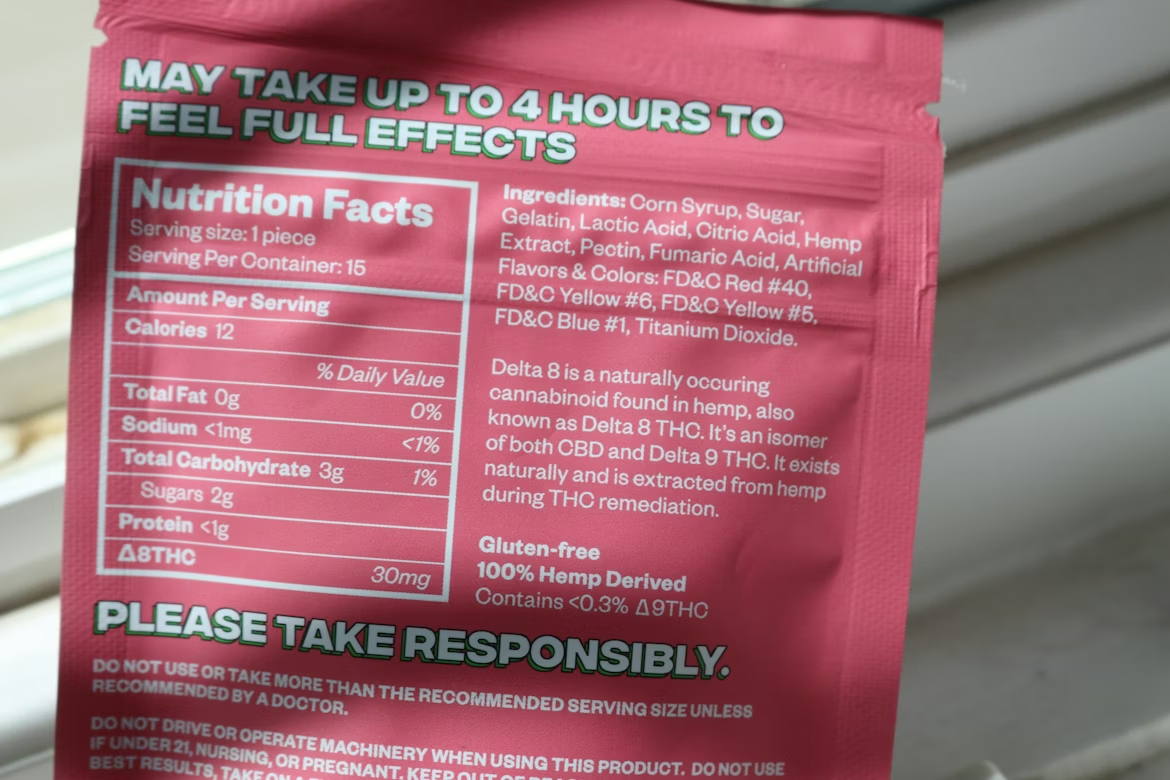
In practical terms, the most reliable information on a pack is always the ingredients list and nutritional information: these are mandatory labelling requirements under an EU Regulation. Ingredients are listed in descending order: the first three or four usually make up most of the product. If you see sugar, syrup or vegetable fats described as ‘partial’ at the top of the list, that matters more than any badge on the front. Words such as ‘light’ or ‘vitamin-enriched’ do not mean that a product is healthier either: often, when something is removed, something else takes its place.
The only claim you can trust without further questions is the EU organic logo together with the certification body’s code. Every other word on the front of a pack deserves at least one critical look at the ingredients list.
When the label reflects the actual ingredients: Sotukai
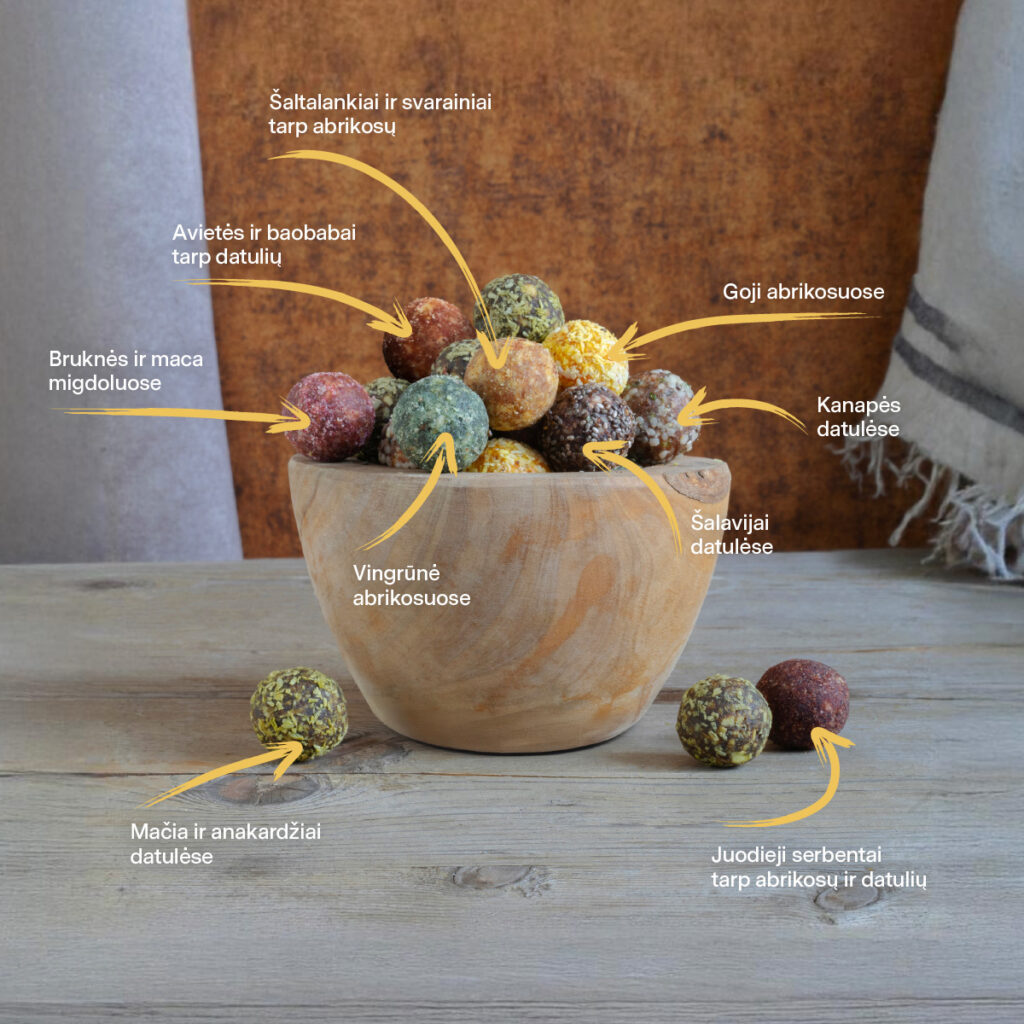
When discussing food labels, it is worth looking at a product whose packaging reflects its actual ingredients. Sotukai plant-based balls do not claim to be organic, but their ingredients list speaks for itself: almonds, cashews, Medjool dates, hemp seeds, goji berries, lingonberries, blackcurrants, baobab, matcha powder, raspberries and maca — no added sugar and no gluten. Lingonberry and maca balls in almonds, hemp seeds in dates, goji in apricots or raspberries and baobab among dates: each variety has a clear, traceable ingredients list. If the ingredients list raises no further questions, the front of the pack becomes a secondary detail.
The label is a starting point, not the finish
Learning to read food labels is one of the most practical skills any consumer can acquire. Studies show that unsubstantiated labels, especially those concerning GMOs or ‘naturalness’, can widen the gap between public opinion and scientific knowledge: people start making decisions based on marketing language rather than facts. Next time you are in a shop, pause for a second and turn the pack over: the ingredients list usually says more than all the words on the front put together.